


Fairness and Bias Mitigation in Computer Vision: A Survey
News Release Summary
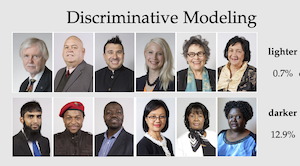
A team of researchers from Michigan State University, Rice University, and UC San Diego have published a comprehensive survey examining how bias and unfairness show up in computer vision systems and what the field has done about it. The core problem is straightforward: when AI models trained on real-world image data learn to recognize faces, describe scenes, or detect objects, they can perform noticeably worse for certain demographic groups — for instance, one face recognition system the authors cite had a 0.7% error rate on lighter-skinned faces but a 12.9% error rate on darker-skinned ones. The researchers catalogued the origins of these disparities, tracing them to both the datasets used for training, which often reflect existing societal biases or were collected primarily in certain geographic regions, and to the design choices in the models themselves, which can amplify those biases beyond what was already in the data. The survey maps out the main technical approaches researchers have developed to fight back, including adversarial training methods that try to strip sensitive attributes like gender or race out of learned representations, data rebalancing techniques that generate or reweight examples to level the playing field, and mathematical frameworks that characterize the fundamental trade-off between a model's accuracy and its fairness. The authors also flag that newer generative and multimodal foundation models like CLIP and text-to-image systems carry these same problems forward while introducing new ones, and that no rigorous mathematical definition of fairness for generative models yet exists — pointing to a significant gap the field still needs to close.
abstract
Computer vision systems have witnessed rapid progress over the past two decades due to multiple advances in the field. As these systems are increasingly being deployed in high-stakes real-world applications, there is a dire need to ensure that they do not propagate or amplify any discriminatory tendencies in historical or human-curated data or inadvertently learn biases from spurious correlations. This paper presents a comprehensive survey on fairness that summarizes and sheds light on ongoing trends and successes in the context of computer vision. The topics we discuss include 1) The origin and technical definitions of fairness drawn from the wider fair machine learning literature and adjacent disciplines. 2) Work that sought to discover and analyze biases in computer vision systems. 3) A summary of methods proposed to mitigate bias in computer vision systems in recent years. 4) A comprehensive summary of resources and datasets produced by researchers to measure, analyze, and mitigate bias and enhance fairness. 5) Discussion of the field's success, continuing trends in the context of multimodal foundation and generative models, and gaps that still need to be addressed. The presented characterization should help researchers understand the importance of identifying and mitigating bias in computer vision and the state of the field and identify potential directions for future research.
details
citation
@article{dehdashtian2024fairness,
  title = {Fairness and Bias Mitigation in Computer Vision: A Survey},
  author = {Dehdashtian, Sepehr and He, Ruozhen and Li, Yi and Balakrishnan, Guha and Vasconcelos, Nuno and Ordonez, Vicente and Boddeti, Vishnu Naresh},
  year = {2024},
  journal = {arXiv preprint arXiv:2408.02464},
  url = {https://arxiv.org/abs/2408.02464},
}